
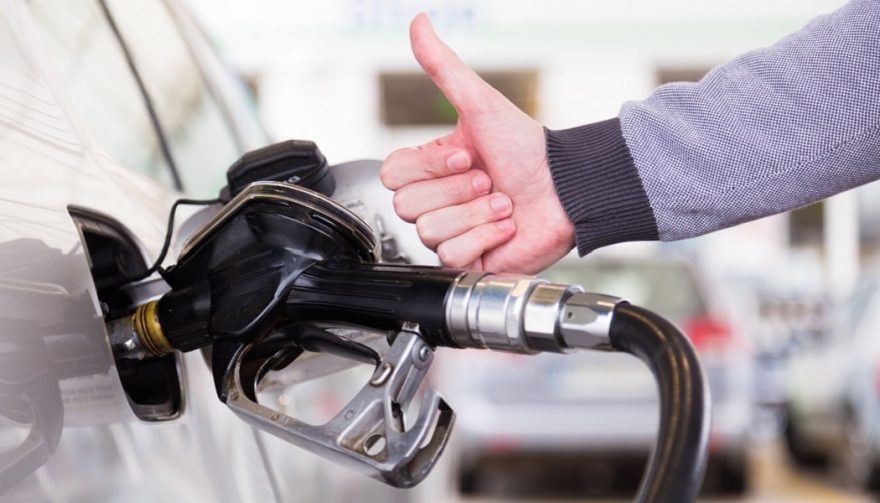
A few simple tweaks will help make you happier at the pump
These Easy Tricks Will Help You Save Gas. Who Doesn’t Want to Save Gas?

Fuel prices may be down, but I’m sure you still want to know how to save gas when you’re driving.
Auto manufacturers have spent fortunes researching and perfecting engines and design elements to create more fuel-efficient cars and trucks. Turbocharging, fuel injection, aerodynamic body design, improvements in automatic transmissions and other components have all resulted in machines that go further on less fuel. Check out some of the most fuel-efficient cars.
A vehicle’s EPA mpg rating is a key factor in its sales appeal, which means manufacturers will continue their efforts to build products that save on gas.
Here’s the good part.
As clever as the auto engineers are, the average driver can squeeze even more mileage out of the most “efficient” vehicle by following a few simple rules. And, along with improving fuel economy, there are some tricks to save money on gas.
Physics 101 Revisited
Newton said: “An object that is at rest will stay at rest unless an external force acts upon it. An object that is in motion will not change its velocity unless an external force acts upon it.”
So how does this help you understand how to save gas? The “object” is your car and the “external force” that takes it from “at rest” to “in motion” is the engine.
The more energy the engine has to exert, the more fuel it will consume. One secret to knowing how to save gas is to find ways to minimize the amount of “energy” required to put the object in motion.
How to Save Gas? Start with the Tires
Let’s start with the “external force” that has the biggest impact on your vehicle’s gas consumption, the tires. Two years ago when gas was at $4 per gallon, AAA estimated that the average American driver was spending over $600 more on gas a year than they needed to. That’s enough to buy groceries for a month for a small family. The reason: the average American’s tires were under-inflated.
When your tire is not properly inflated it has a fatter profile, meaning there is more rubber meeting the road than necessary. This increases friction and increases the amount of energy needed to get “in motion.” More energy means you’re burning more gas. Not a good thing.
Tire Rack, a large online tire retailer, says that the average vehicle can increase gas mileage by 0.6 percent to 3 percent when tires are kept properly inflated. Under-inflated tires reduce fuel efficiency by 0.2 percent for every 1 psi that the tires are under-inflated. Are you already thinking about buying a new tire gauge? Get a good one if you do.
Properly inflated tires will save you gas, last longer and are safer to drive on than under-inflated rubber. If you don’t know what the proper inflation is for your tires, check the sticker on the driver side door jamb for the specifications.
The hard part is getting into the habit of checking the pressure (assuming your vehicle doesn’t do that automatically) routinely and keeping the pressure up. That was one of the perks of full-service gas stations, somebody was always checking your tire pressure. Try to make a reminder to check yours every month since nobody is doing it for you now.
Last year the U.S. consumed 143.37 billion gallons of gas. So if you use Tire Rack’s numbers, the country could have burned 1 to 4 billion fewer gallons of gasoline if everybody’s tires were properly inflated.
How to Save Gas: Put Your Car on a Diet
How much your car weighs obviously has an impact on how much energy is required to put it “in motion.” Every year manufacturers try to slim their cars down to improve mileage and performance.
Your car or truck may be hiding extra pounds. Check the trunk for unnecessary stuff. It’s springtime now so you can remove those bags of salt or sand or kitty litter. If you’ve got stuff in the trunk you keep meaning to take to Goodwill, do it!
If you are a golfer, don’t use the trunk as a closet for your clubs. They add weight and you know they will be stolen if somebody pops your trunk. Clearing your vehicle of anything you don’t need helps reduce the amount of energy you use.
Now about the stuff you add on. Pickup drivers, we’re talking to you and your truck accessories. How much are those monster tires, grille guard, light rack and other gadgets going to increase your vehicle’s total weight? Let alone affect aerodynamics? We know you’re going to do it. Just be aware of the impact they will all have on your mpg.
How to Save Gas: Change Your Driving Style
Let’s talk about keeping cool in the warmer months. When the AC is on, energy is diverted to run the compressor and fan. Fuel efficiency goes down. The alternative is to lower the windows, but at certain speeds this affects the aerodynamics and increases drag. Mileage goes down again. There’s a healthy balance in there somewhere.
So if you’re going to be driving at slower speeds, say around town, try to keep your windows down. If you’re traveling on the highway, use the AC.
But still try to minimize the amount of work your AC has to do. Start your car with the AC off and the windows down to allow the overheated air in the cabin to escape. Park in the shade if you can.
If you are an aggressive driver you are a gas waster. Rapid acceleration, frequent lane changing and hard braking all use up energy. Slow it down and apply a more consistent “external force” to your driving.
How to Save Gas: Regular Maintenance
Of course, it goes without saying that you want to follow your manufacturer’s scheduled maintenance plan.
Keep the engine tuned, the oil clean and the front end aligned to optimize the gas saving features that your car or truck comes equipped with.
Do you have any tips or tricks to improve fuel efficiency? Let’s hear them.


