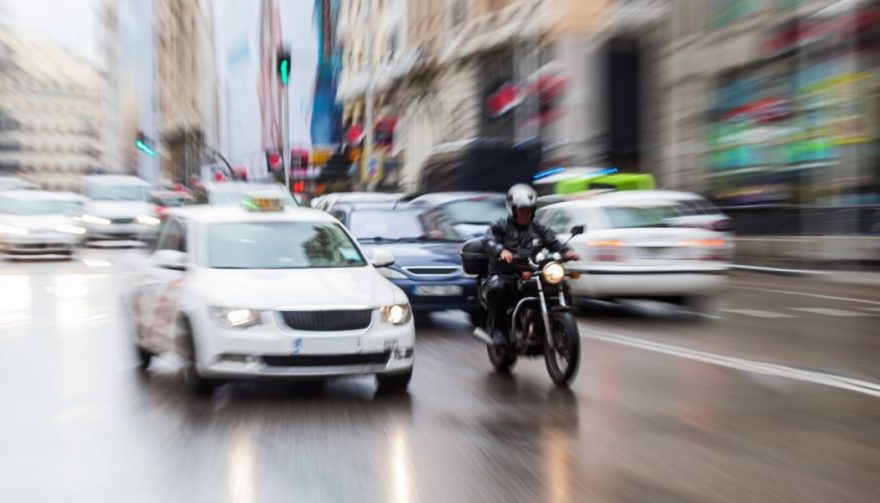
If you're riding a motorcycle in the rain, make sure other drivers know you're on the road
Don’t Sweat the Wet Stuff? Here Are Some Tips for Motorcycling in the Rain

Whether you intended to or not, you may find yourself riding a motorcycle in the rain this time of the year. You’ve waited too long since winterizing your bike, and you’re ready to ride. No matter the weather.
Here are five tips to stay safe riding a motorcycle in the rain.
Wear Proper Gear
Just because you’re riding a motorcycle in the rain doesn’t mean you can don your swimwear for your ride. Standard motorcycle gear won’t cut it either, because average threads will just soak up the water, leaving you wet, cold and heavier.
You’re going to want to wear gear that’s been made with a waterproof fabric or treated with solid waterproofing. Gore-Tex is a popular, name brand option, but there are others out there that will keep the wet stuff from soaking in. Staying dry is key to staying comfortable on the road.
Remember, if you’re comfortable, you’ll pay less attention to being cold and wet and more attention to the surrounding environment.
Visibility is also important, especially during a rain shower. If you’re riding a motorcycle in the rain, seeing and being seen is crucial.
Those little reflective strips along the lower back and each limb of your everyday gear won’t cut it in the rain. A high-visibility jacket is a smart investment, providing a large, noticeable heads-up to other driver that you exist.
If you happen to be caught out in an unexpected storm however, keeping a high-visibility vest stored on the bike is a great idea. Compact, simple and incredibly noticeable make this a must-have for every motorcycle.
Watch the Road
Unfortunately, water doesn’t provide more traction between the road surface and your tires. But water isn’t the only thing making the roadways more hazardous when you’re riding a motorcycle in the rain.
Dirt, oil, grease, grime and an assortment of other fluids build up on a dry road only to wash away in the rain. This ombination of runoff makes the roads especially slick in the early stages of a rain storm. You’ll really want to be on the ball during the early part of a storm.
Rain also tends to puddle in the low areas, hiding hazardous potholes or debris. Take it slow through these areas. Sure, splashing is fun, but damaging a wheel because of an unexpected hole in the road isn’t.
Watch for Others
Everyone forgets how to drive in the rain. It could’ve been raining all week and there will still be those on the road who still haven’t learned basic physics or employed common sense.
Cagers will also continue to drink coffee, text, daydream and whatever else they do while they’re driving.
You will need to take the initiative for your safety. The lifted pickup to your left or the always-in-a-rush Audi behind you aren’t paying attention to the massive puddle stretching across the middle of the road.
They also aren’t aware that you’re taking extra precautions to stay upright and make it home in one piece. You need to be watchful of those around you and obvious with your intentions. This is a very important way to avoid a common motorcycle accident even in the best weather.
Motorcycling is 5 percent managing yourself and 95 percent watching out for others, and goes double or triple when the driving conditions are bad. Anticipate the actions of other drivers, even the dumb ones, and you’ll stay safer on the road.
Slow and Steady Movements
Decreased visibility and traction mean you’ll have to concentrate a little more on your maneuvering. Roll onto the throttle easier, gently apply brakes earlier than normal, ease into a turn or lane change with greater care.
The goal is to be more predictable than normal with your movements in order to react better to the unpredictability riding a motorcycle in the rain introduces.
Quick, sudden movements have their place, but when nearly slick tires meet reduced traction and visibility, the end result usually ends with a bike on the ground, or at least a fresh brown spot in the seat of your trousers.
Wait It Out
Sometimes the cats and dogs turn into elephants and whales. When that happens, it’s best just to pull over at the next turnoff (or an underpass if you must, but stay far away from the driving lanes) and let the storm pass.
There’s no need to be a stud and there’s no shame in drinking some gas station java waiting for the rain, and craziness, to pass you by.
And there you have it. Wear the right gear, watch the road and others, take it easy, and wait it out. Five simple, yet important, rules to make the most of riding a motorcycle in the rain.
Now go out, burn off the Sta-bil and make good on your promise to ride more this spring. Trust me, you won’t regret it.