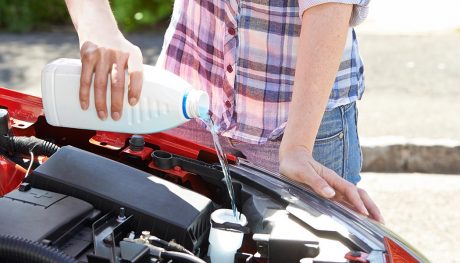
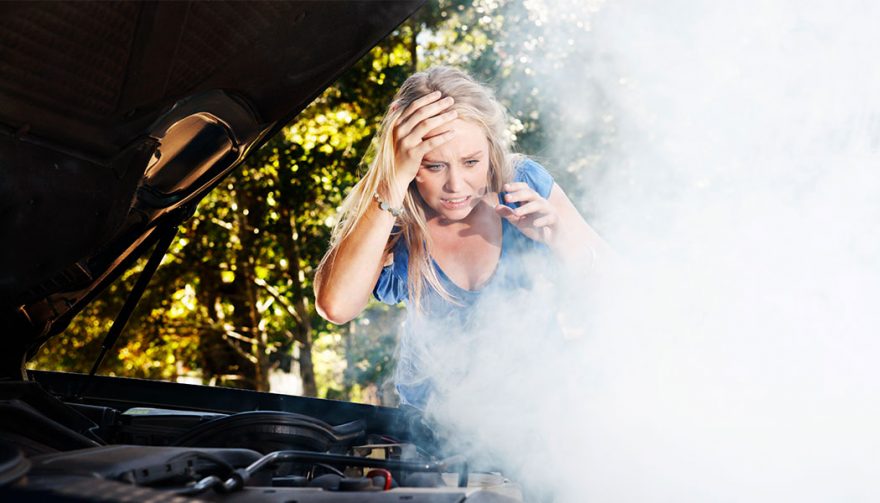
If you have an overheated engine, you don't have time to think about what to do. Pull over.
5 Emergency Hacks for an Overheated Engine

An overheated engine will grab your attention faster than a New York minute. Steam pouring out from under the hood or boiling out from under the dash (failed heater core), bells ringing and warning lights flashing will get your heart pumping and your brain reviewing worst-case scenarios in hyper speed. An overheated engine is one of a driver’s worst nightmares.
And it’s totally preventable.
Automotive technology has made incredible advances in the past decade bringing the goal of an autonomous automobile closer and closer. Each advance has relieved the driver of some form of responsibility. You don’t have to look over your shoulder to back up any more, just look at the video feed. In fact if there’s something behind you, the car will tell you and in some cases even brake to avoid an accident.
So many tasks are now performed by technology that the idea of drivers being responsible for preventive maintenance of the cooling system almost seems unreasonable.
Unreasonable or not, the health of your cooling system is up to you. Spending a few moments checking fluid levels and hose conditions can save you the disaster that a failed cooling system wreak.
So What Could Go Wrong?
All internal combustion engines have a cooling system. Some rely on air cooling like motorcycles and lawnmowers, but most count on a liquid coolant to dissipate heat. In the typical liquid-cooled system, pressure is provided by the water pump which pushes the coolant into the engines coolant jacket where it absorbs heat and is then sent to the heater core.
The heater core heats the air inside the cabin. The amount of heat provided is determined by a valve. The “hot coolant” is then sent via hoses back to the radiator where it is air cooled and then begins the process again.
Another key element in keeping engine heat in check is the engine oil. By lubricating internal parts the oil reduces friction thereby reducing heat. Nearly 40 percent of the “cooling” function is performed by engine oil. Running an engine with dirty oil or low oil increases heat and risks engine damage.
So what could go wrong?
- The water pump could fail and the coolant is not circulated.
- A hose could burst draining all of the coolant.
- A hose could spring a leak. The loss of coolant isn’t as big a problem as the air that is sucked into the system via the leak. The air can form a bubble or “air lock” that effectively blocks the coolant from circulating.
- The thermostat can malfunction and restrict the amount of coolant circulating.
- Corrosion and mineral buildup in the radiator can obstruct the flow of coolant.
- The gasket on the radiator cap can fail reducing pressure in the system.
- The coolant mix is off or simply worn out. If the mix of coolant (antifreeze) and water is off the coolant may gel in colder weather obstructing the system. Engines can overheat even in subzero temperatures if the cooling system is blocked. Like oil, engine coolant needs to be routinely flushed and replaced to work effectively.
- Belts drive the water pump and the engine fan. If a belt fails or becomes loose it will have an adverse effect on the cooling system.
If you have a problem with the cooling system you are not going to get advance notice that something is wrong. Unlike that “clunk” you heard coming from the right front wheel that turned out to be a bad tie end rod, your first clue that you have a cooling system problem will be your engine temperature gauge spiking or steam rolling out of the hood.
If that happens, don’t spend a lot of time thinking about what to do. Immediately pull over and turn off the engine. Driving on a hot engine could cost you that engine.
5 Emergency Hacks for an Overheated Engine
Here’s the ultimate overheating nightmare in an urban environment. You are in gridlock traffic and you notice your temperature gauge rising. You can’t remember the last time you flushed the coolant or changed the oil but you’re pretty sure neither fluid is in tip top condition.
Traffic is bumper to bumper and there is no way you are going to cut through a lane to get to the curb or a parking lot where you can stop. The temperature gauge continues to creep upward.
Here’s what you can do:
- Turn off your air conditioner to reduce the strain on the engine.
- Turn on your heater and set the blower on high. This will pull some heat off the engine via the heater core. Obviously you’re going to want to lower a window or two.
- When you are stopped in bumper to bumper traffic, shift to neutral and rev the engine to 2500 rpm. This will keep belt driven components like the water pump and radiator fan operating efficiently.
- When conditions allow pull over and turn off the engine. Raise the hood to help speed up the cooling. Allow the engine to sit for at least 20 minutes before restarting.
- DO NOT under any circumstances attempt to remove the radiator cap. Unscrewing the cap runs the risk of serious burns from steam under pressure.
Avoid the Problem Altogether
An overheated engine is not like a flat tire or running out of gas. An overheated engine is more than just a time consuming annoyance; it is a potentially disastrous event for both your engine ad your wallet.
When you think of it in those terms, the few minutes it takes to check coolant levels, oil level and give the hoses an eyeballing seems like a good investment. Likewise, when a rebuilt engine could set you back thousands, a $50 flush and replacement of coolant seems a reasonable sum.
In short, just follow the manufacturer’s recommended maintenance schedule and you will minimize the risk of a damaged engine. We know this is not new advice but rather a reminder that despite the fact your car can now avoid a rear end collision all by itself it still needs you to take care of it.