
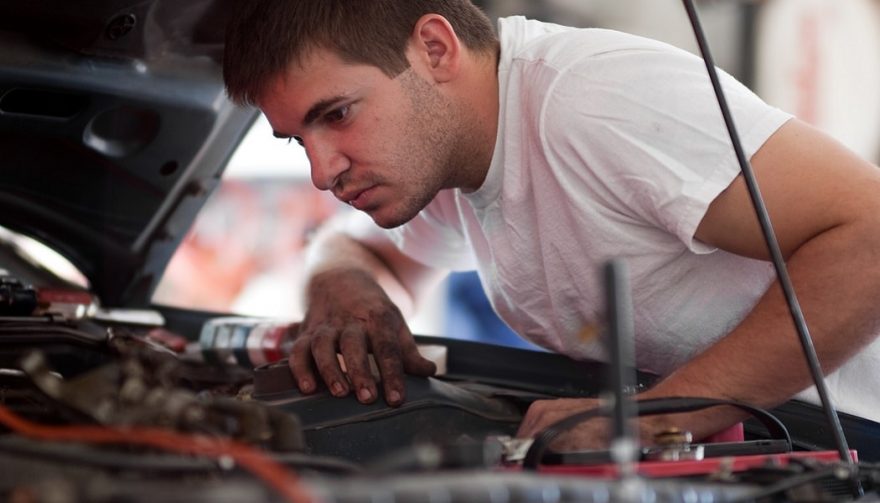
Maintenance inspections are pretty easy to perform by yourself, even for someone with little knowledge of car mechanics
How to Do a Maintenance Inspection Like a Pro

For most people, a car maintenance inspection is like taxes. They both cost a fair amount of money, you can’t really avoid them or you’ll end up in trouble, they keep coming sooner than you would like them to, and most of the time, you are not confident enough to do them yourself so you have to pay someone else to do them for you.
Surprisingly, maintenance inspections are pretty easy to perform by yourself, even for someone with little knowledge of car mechanics. All you need to do is to buy yourself a beginner set of auto mechanic tools, get your hands on a car in need of a little love and learn some of the basics. And, you guessed it, I am here to help you with that. (I can’t really help you with your taxes, though. I’m in the same boat as you on this one.)
As a professional auto mechanic for the last 10 years, I’ve done a lot of maintenance inspections. And when I say a lot, I mean a lot. Inspections are the most common task a mechanic has to perform on a daily basis, so I developed a process allowing me to speed things up while making sure everything is covered and I don’t forget to check anything.
If it’s your first inspection, take it slow, follow my instructions and you should be able to save money and inspect your own car in no time.
Also, I have created multiple free printable vehicle inspection forms to help you follow along and make sure you don’t forget to inspect any system. These are the forms I personally use in the shop when I inspect cars for clients.
Getting Started
The first thing you need to ask yourself is what kind of inspection does your car need. Car dealers give many different marketing-driven names to their inspections like A or B services, 67 points inspection, and the like, but to make it simple, inspections can be divided into three different types: quick, medium and full inspection.
You can do a quick inspection while you chance your oil. Medium inspections intervals may vary but I recommend you do one every year, depending on your mileage (let’s say 1 year or 15,000 miles). You need to perform a full inspection when buying or selling a car, or that particular Sunday when you have too much time on your hands.
Quick Inspection
Quick inspections shouldn’t take any more time than simply changing your oil. Typically, you should have enough time to inspect everything while waiting for the oil to drain completely.
- Check the interior. Make sure there’s no crack in the windshield. Check the mirrors, the windshield washer and wipers, and that all the interior lights and other accessories are working properly.
- Get out of the car and inspect the lighting system.
- If your car is equipped with a cabin air filter, inspect it for excessive dust.
- Open the hood and inspect all the fluids: windshield washer, power steering fluid (if equipped), coolant and brake fluid. Watch for any oil or fluid leaks in the engine bay.
- Inspect the engine air filter.
- Remove the oil fill cap. This is something I always do so I never forget to refill any car with oil – it’s a good visual reminder.
- Raise the front end of the car. Remove and replace the oil filter. Remove the oil drain plug and let it drain.
- Inspect the brake system. On most cars, you can see the thickness of the brake pads and the general state of the rotors through the wheels. If not, take a look at the interior side of the brakes. Brake pads always wear faster on the inside so if it’s good on the inside it’s probably good on the outside. Make sure your brake pads are at least 4mm thick.
- Inspect the direction system and look out for anything loose. Shake both front wheels from side to side to detect any defective part.
- Inspect the suspension system for leaks. Greasy shocks indicate oil leaks and leaking shocks should be replaced.
- Inspect and inflate your tires to the correct pressure. If you are not sure what pressure you should inflate them to, take a look inside the driver’s door jamb.
- Re-install the drain plug.
- Lower the car.
- Fill the engine with the correct oil quantity. Start the car to fill the oil filter and re-check the oil level.
Medium Inspection
The medium inspection includes all the points listed above as well as a more thorough inspection, including removing the wheels, inspecting and servicing of the brake system, and inspecting the exhaust system for cracks and leaks.
- Perform steps 1 to 7 of the quick inspection.
- While waiting for the oil to drain, remove the wheels, remove the calipers or brake drums and grease the sliding points of your brake pads and make sure the sliding pins are in good working condition.
- Inspect the exhaust system.
- If your car is equipped with a manual transmission, check your transmission fluid level. If your car is a rear-wheel drive vehicle, you also need to check your rear differential fluid level.
- Perform steps 9 to 13 of the quick inspection system.
- With the car lowered, you can now remove and inspect your spark plugs. Newer cars don’t require spark plugs replacement before 100,000 miles, but it never hurts to take a look.
- Use a coolant tester and test and replace your coolant as needed.
- If your car is equipped with an automatic transmission, pull the transmission dipstick and check the fluid level.
- Fill the engine with oil, start the car and re-check the oil level.
Full Inspection
The full inspection is mostly a very detailed version of the medium inspection, including an inspection of the body, engine mounts and virtually every part of the vehicle.
Normally, a full inspection takes about an hour to perform and may be a little much for beginner auto mechanics. I strongly suggest you get your hands dirty on quick and medium inspections first.
When you feel like you are ready to tackle such task, grab one of those Chilton or Hayne’s repair manuals for your car and follow along with our full inspection form. This should ease things up a lot.
Learning the Basics of Auto Mechanics
In life, there’s is no easy way to learn anything. But everything is easier to learn using the right tools and the right resources.
If you need help finding your way in the ocean of tutorials and DIY stuff available to you on the web, take a look at this list of the best auto mechanic books for beginners I have created.
Last Words
Maintenance inspections can seem a little daunting at first but trust me, it gets easier with time. Always take your time, never work on your car when you are in a rush and always put safety first. Start with the small stuff and work your way up. Having a small knowledge of how cars work will also help you be more confident the next time you have to bring your car to the shop and your mechanic tells you that your car need some kind of work. You’ll know what he is talking about, you won’t feel like you are getting ripped off anymore and, if you get good enough, you’ll be able to save even more money by fixing your car by yourself.
Every mechanic has their own way of doing things and one of the most valuable resources you can have is another mechanic sharing his own tips and tricks, so tell me your inspection process and how you do things when it comes to inspections so I can learn from your experience too.
I hope it helped! Cheers and have a nice day!

Jee is a professional auto mechanic by day and the editor of TheMechanicDoctor.com by night, a project created to share tips, tricks, tutorials and other insightful resources for beginner and professional auto mechanics.
Follow him and his team on Facebook: The Mechanic Doctor